Wonderful history of devotion to the Holy Hearts of Jesus and Mary
The Gospel and the early Church
Veneration of the Hearts of Jesus and Mary is rooted in the Gospel: "You shall love the Lord your God with all your heartwith all your soul and with all your mind. This is the greatest and first commandment" (Mt 22:36-40).
The importance of love for the saints Hearts of Jesus and Mary finds its inspiration in this first commandment.
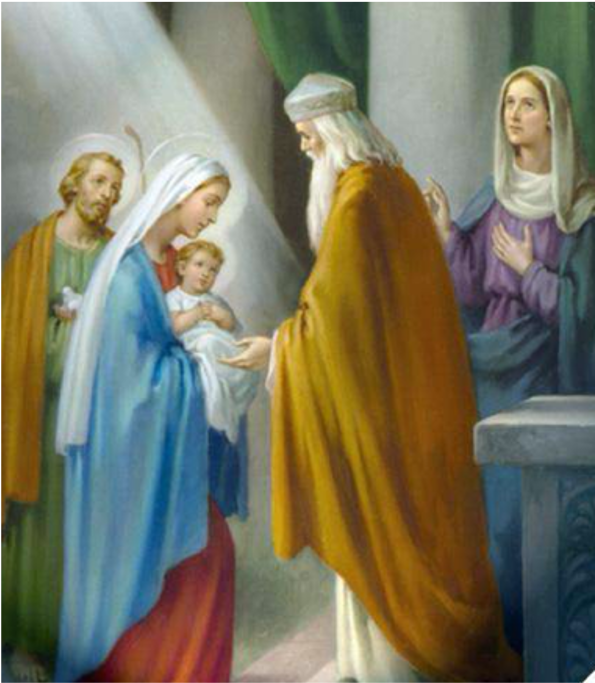
At the Presentation in the Temple, Saint Simeon said to the Blessed Virgin: "A sword will pierce your soul" (here we mean her motherly heart). When, with St. Joseph, she found Jesus in the temple after having lost him, the Gospel tells us: "The Blessed Virgin kept and meditated on all these events in her Heart "(Luke 2:52). On the evening of the Last Supper, Saint John, the disciple whom Jesus loved, will affectionately lay his head on Jesus' head. Heart of Christ (John 13:23-25). On the Cross, the Heart of Christ will be pierced and blood and water (symbolizing the Eucharist and Baptism) will come out.
Later, Popes and Saints began to speak of the devotion due to the Hearts of Jesus and Mary. In 604, Pope St. Gregory the Great taught us: "Learn from the Heart of Jesus and Mary. Heart the teachings of God to long for eternal things". Then there's Saint Anselm in the 10th century, Saint Bernard of Clervaux in the 12th, Saint Francis of Assisi in the 13th, Saint Bonaventure, Saint Gertrude of Helfta, Saint Mechtilde of Hackeborn.
Saint John Eudes the Precursor, 17th century
Just as Saint John the Baptist announced the coming of Christ, it was another John, Saint John Eudes, who really announced the great devotion to the Hearts of Jesus and Mary. He was the first to associate them closely, and wrote the beautiful prayer known as theAve Cor.
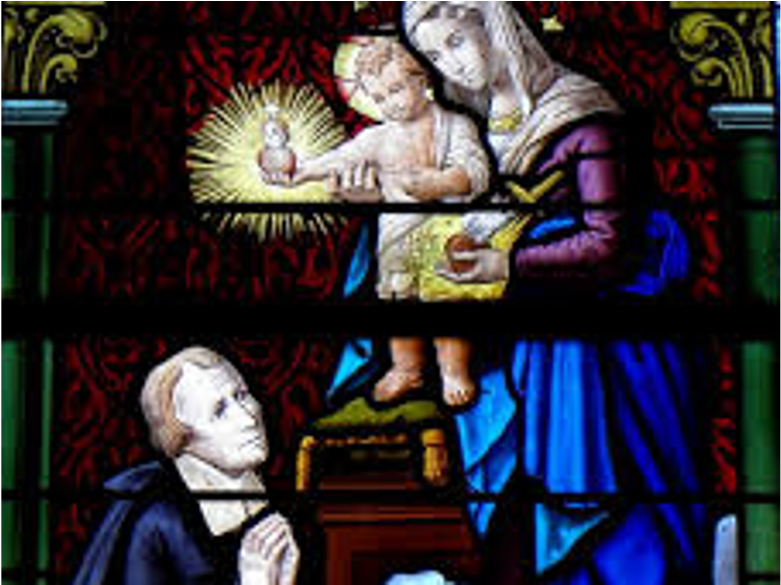
"This prayer is addressed jointly to the Most Holy Hearts of Jesus and Mary. For even though the Heart of the Son is different from that of the Mother, and infinitely surpasses it in excellence and holiness, God has united these two Hearts so closely that we can truly say they are but one Heart, because they have always been animated by the same spirit and filled with the same sentiments and affections. Jesus is so alive and reigning in Mary, that He is truly the soul of her soul, the mind and heart of her heart. So much so that, properly speaking, the Heart of Mary is Jesus; and so to greet and adore the Heart of Mary is to greet and adore Jesus inasmuch as he is the spirit, soul, life and Heart of his Most Holy Mother".
Saint John Eudes (1601 - 1680)
This devotion having been magnificently introduced into the Church, Christ and the Blessed Virgin will then come in person to reveal to us, in three successive stages, the need to place devotion to their united Hearts at the center of our modern lives.
Stage 1 - Paray-le-Monial: devotion to the Sacred HEART
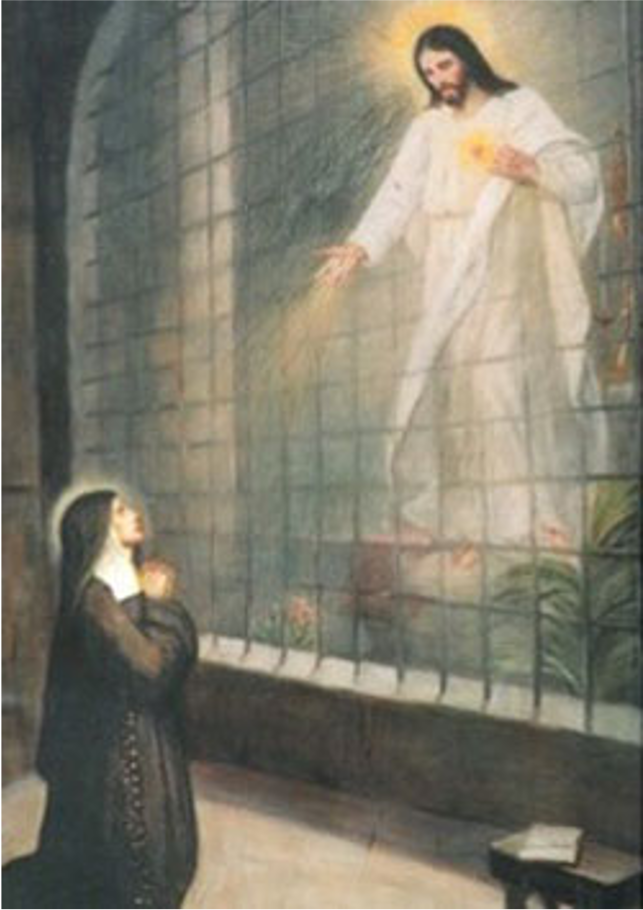
In 1673-1674, a few years before the death of his messenger Saint Jean Eudes, Christ appeared to Saint Marguerite-Marie at Paray-le-Monial (France). He made a solemn request for devotion to his Sacred Heart. He will describe in precise terms the acts and prayers He expects of us, and will attach to them magnificent promises, underlining the importance of His requests and the power of this devotion.
Addressing the faithful, he asked them in particular to Communion on the first Friday of the month and Holy Hour on Thursday evenings. He asked the King, the representative of temporal power, to consecrate his family and France to the Sacred Heart, and to place his Sacred Heart on the French flag and coat of arms. But neither Louis XIV nor his successors would follow these requests, and exactly one hundred years later, the revolution would destroy royalty in France and spread to the rest of the world.
Pope Clement XIII, however, having understood the importance of Christ's apparitions at Paray-le-Monial, officially instituted the feast of the Sacred Heart on February 6, 1765.
Stage 2 - Rue du Bac: the HEART of Mary next to the Sacred Heart
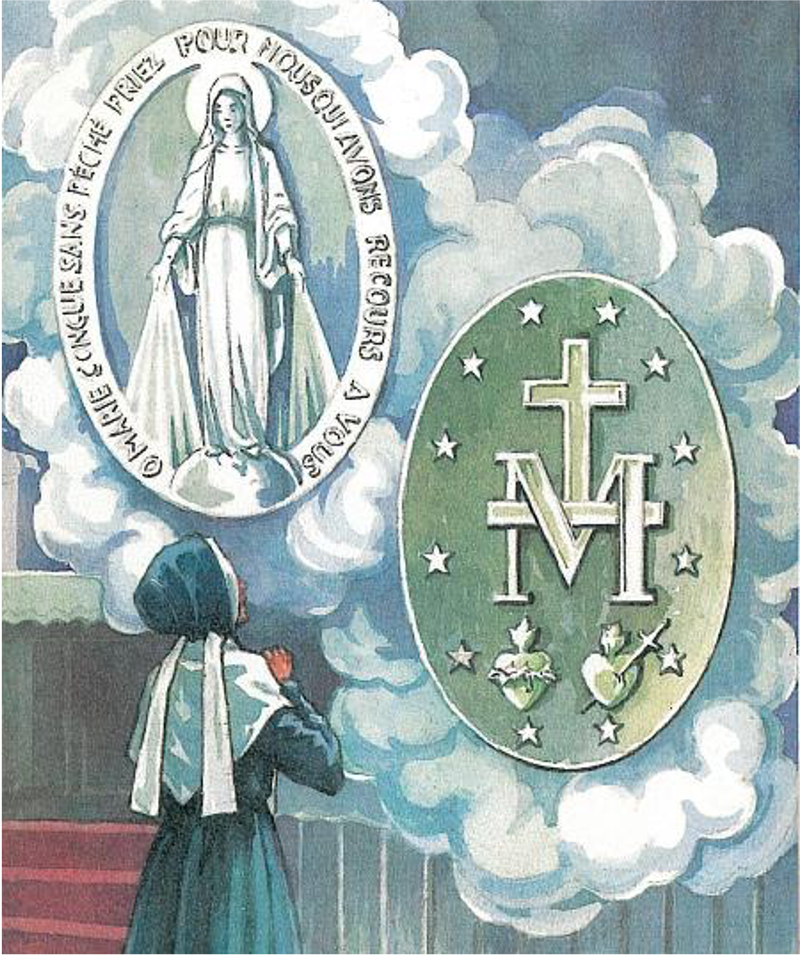
The martyrdom of French clergy and Catholics during the French Revolution and the years that followed - culminating in the massacre in the Vendée - brought many graces to France. In 1830, the Blessed Virgin appeared to Saint Catherine Labouré on rue du Bac in Paris, announcing that she was the mediatrix of all graces.
She asked him to have a medal engraved on the reverse, depicting her Heart next to that of her son Jesus, a subtle announcement of future devotion to her Immaculate Heart. The apparitions on rue du Bac were thus the link between Paray-le-Monial and Fatima, and opened the way for devotion to the Heart of Mary.
The first manifestation of this devotion came six years later. In 1836, the Basilica of Notre-Dame des Victoires in Paris was deserted, and its parish priest, Father Desgenettes, was in despair. On December 3, the first Saturday of the month, as he was saying Mass alone, he repeatedly heard an inner voice saying: "Consecrate your parish to the Immaculate Heart of Mary". Two weeks later, he obeyed, and the faithful began to flock. Five years later, the Confraternity of the Immaculate Heart of Mary he founded had two million members, and Notre-Dame des Victoires had become the busiest parish in Paris.
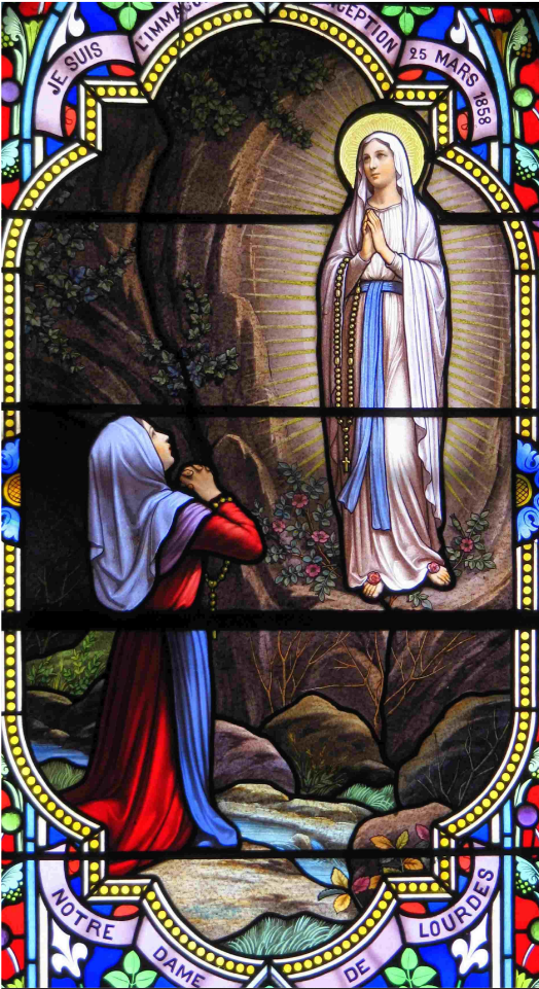
After the Rue du Bac, the Virgin stepped up her direct action spectacularly. She returned to La Salette (1846), Lourdes (1858), Pontmain (1871) and Pellevoisin (1876). At Lourdes, the dogma of the Immaculate Conception. Notre Dame demandera également de façon incessante de prier pour les pécheurs car comme le disait Sainte Thérèse d’Avila, “les âmes go to hell comme les feuilles des arbres tombent en automne”. Ces deux thèmes sont au cœur de Fatima qui viendra couronner ce cycle unique d’apparitions mariales.
At the same time, devotion to the Sacred Heart continued to grow. It was celebrated everywhere, and numerous churches were dedicated to it. Stained-glass windows and statues in honor of the Sacred Heart will spring up all over France and the world. France established the world's largest church dedicated to the Sacred Heart in its capital. Finally, Pope Leo XIII consecrated mankind to the Sacred Heart in 1899.
Stage 3 - Fatima: Devotion to the Immaculate Heart of Mary
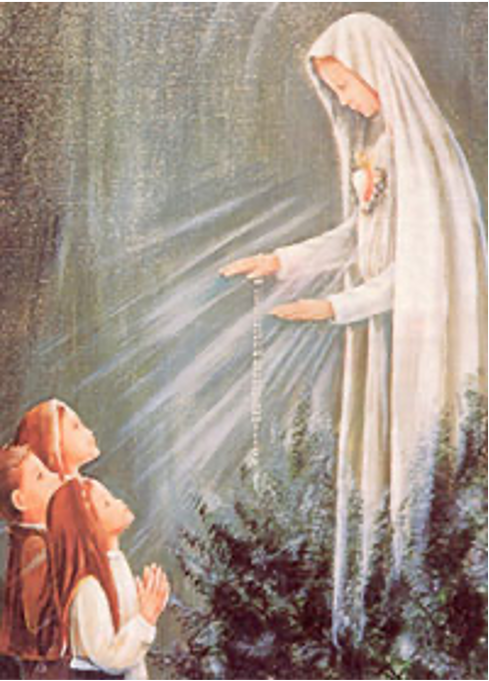
In 1917, the state of the world was appalling. World War I was raging, and the Bolshevik revolution was looming in Russia. Our Lady appeared six times on the 13th of each month, from May to October, in Fatima (Portugal) to three young shepherds, Lucia, Jacinta and Francisco. She announced:
"God wants to establish devotion to my Immaculate Heart in the world."
Cardinal Cerejeira, former bishop of Fatima, will explain:
"In a way, Fatima is the continuation, or rather the conclusion, of Paray-le-Monial. Fatima brings together these two hearts that God–united in the divine work of Redemption.
Like the Sacred Heart, and in a surprisingly symmetrical way, the Blessed Virgin will in turn describe the seven acts and prayers she expects of us, and attach to them magnificent promises, including peace in the world. In particular, she asks to the faithful and to the Pope Communion of Reparation on First Saturdays of the month associated with the consecration of Russia to her Immaculate Heart.